aaron-bell-wakeboard.png
Aaron B

Owner, Deja Vu Ski & Board · 20+ years wakeboarding · Former State & National wakeboard champion

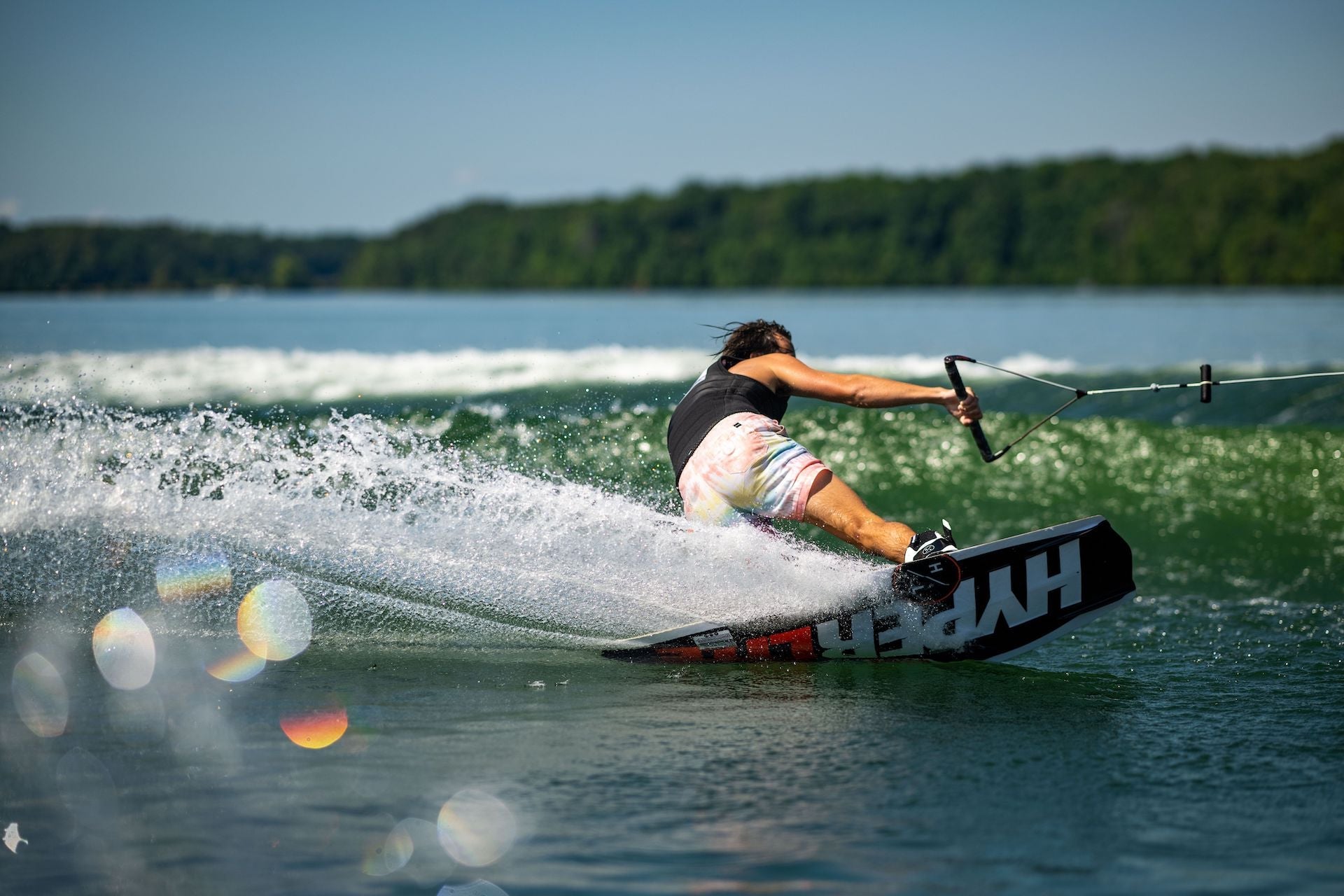
Behind the boat and out at a cable park, wakeboarding can feel like two different sports — and the gear has gone the same way.

Stand a boat board next to a park board and they look near enough the same: similar shape, similar size, similar finish. Underneath, they're built for very specific jobs.

That catches a lot of people out. For riders that start in one discipline then get the chance to try the other, one question comes round pretty quick — will the board you've already got do the job, or do you need something made for it?

The real answer is, in most cases, a purpose-built board is the best option.

There's a real distinction between the two, and it's bigger than it looks. We’ve outlined below some of the most important features so you can understand what’s different, why, and what you should do about them.

Built different

This is the biggy. If you take one thing from this page, take this: boat and park boards are fundamentally different technology — different core and surface materials, put together to suit completely different riding.

When you ride park, your board isn't just interacting with water. It's getting beaten from pillar to post on features of every shape and size, and it has to take those hits without disintegrating beneath your feet. So the core is built to flex, and the base and sidewalls are made tough enough to handle feature after feature, session after session.

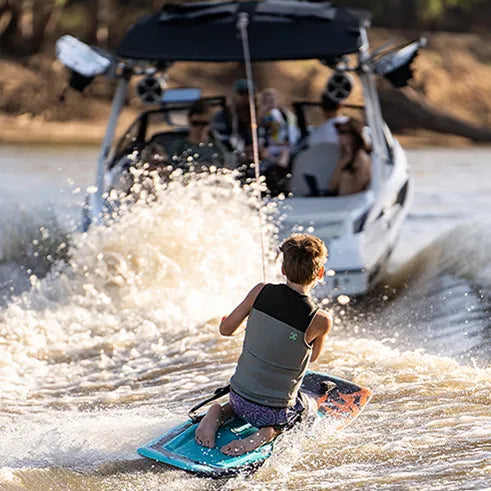
Your boat board needs none of that. All it touches is water — and it works that water differently. Behind the boat it's about edge control and pop off the wake, and that calls for a stiffer board with deeper fins and channels cut into the base.

Fins, rocker and size

These are the most commonly discussed features on a wakeboard. And it’s important to understand how different approaches to each are used between park and boat riding.

Fins. Boat boards run deeper fins and moulded channels to hold an edge at speed. Park boards are usually finless — partly so the board slides and spins over features without catching, partly because fins chew up the obstacles (most parks won't let you ride with them anyway).

Rocker. Behind the boat it's a real choice: a continuous rocker is fast and predictable, while a three-stage rocker gives a sharper, more vertical pop. At the park, with no wake to launch off, it barely matters — treat rocker as a boat decision.

Size. Park boards run a touch bigger for the same rider; the slower line speed and flat landings reward the extra surface. Our sizing guide has the boat and cable numbers side by side — the short version is to size up from your boat length.

If you want to learn more about these wakeboard features check out our guide How to buy a wakeboard.

Side by side

How a boat board and a park board stack up across the features that matter.

Feature Boat board Park board
Base Smooth, built for control Hard-wearing grind base, reinforced sidewalls
Core Stiffer, for pop More flex, for presses and absorbing impact
Fins Deeper, for edge hold Minimal or finless
Rocker A real choice Barely matters
Size Standard for your weight Size up 5-8cm (at least)

What about bindings?

It's not just the board — where you ride changes your bindings as well.

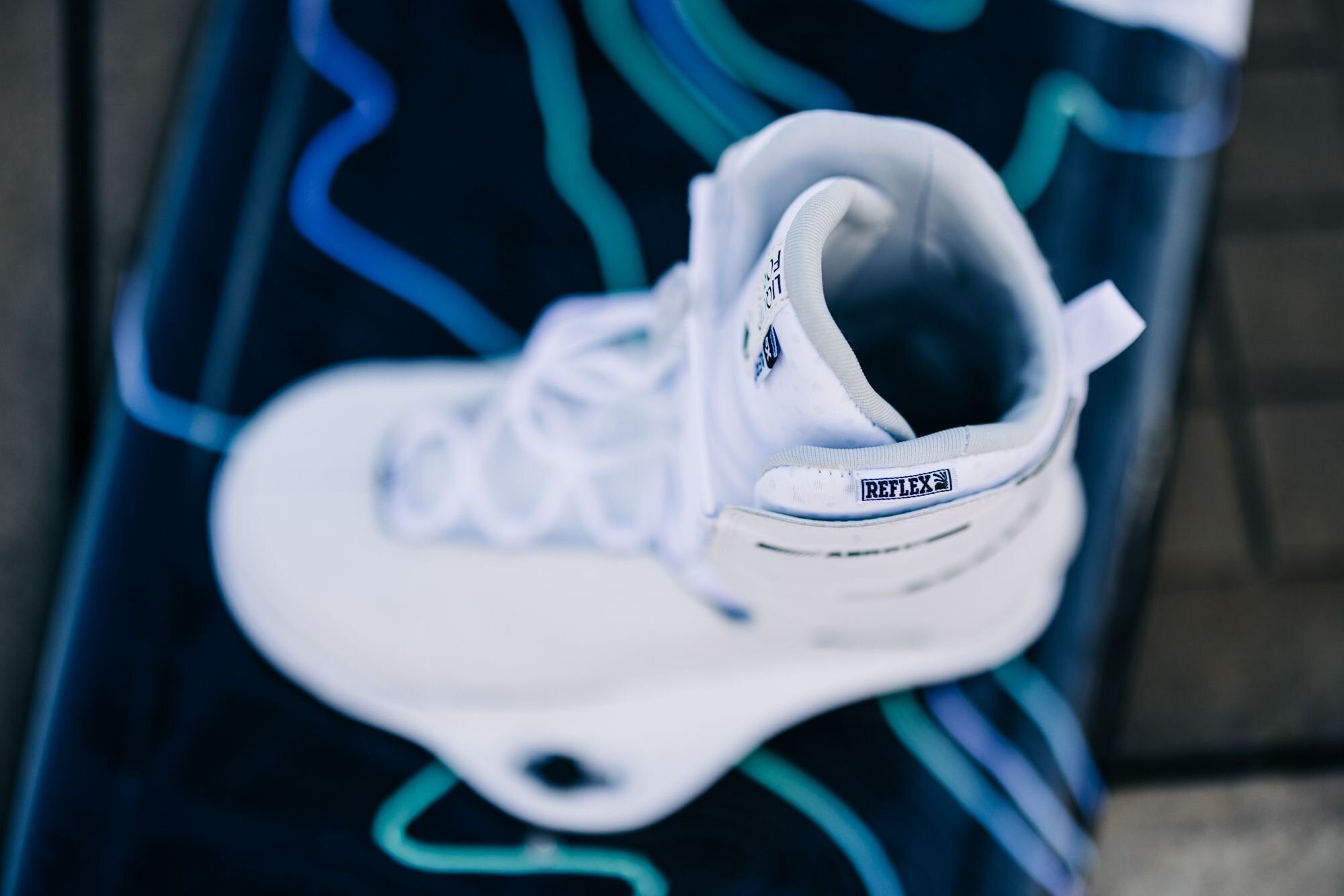
At the park you're climbing out and walking back to the dock after every fall, so park riders favour walkable or step-in (system) bindings you can get out of easily.

Behind the boat you're strapped in for the whole set, so most riders stick to the most cost-effective “normal” bindings. That said, if you are riding both, cable-oriented bindings aren’t going to hold you back behind the boat.

Can I just use the board I've got?

For a one-off, you’ll most likely get away with it.

If you’re a boat rider hitting cable, pull the fins out of your boat board and you'll get around a cable park fine. If your board is in warranty, be aware — as soon as it hits a feature, you can void your warranty.

If you’re starting to do more regular sessions, and you’re hitting features, you’re likely to notice some wear and tear through the base and quite possibly some delamination. If you'd rather not chew up your good board, your best call is to hire one at the park.

Going the other way is easier. A park board will sit happily behind a boat; it'll just feel softer and won't pop like a stiff boat board. You’ll likely be riding a little faster than cable, so edge control can be tricky as well.

Which board should you buy?

  • Mostly or only behind the boat: a boat board — without hesitation.
  • Mostly or only at the park: a park board — tough base, plenty of flex, finless.
  • Boat rider, the odd park day: keep your boat board and hire at the park. No sense owning a board for a maybe.
  • A true 50/50 split: if you can stretch the budget, two boards are best. Or a hybrid (dual-purpose) board. Only a couple of brands offer these and they mostly lean towards a park build, so you give up a little boat performance.

The bottom line

Yes, there is a difference between park and boat wakeboards. And it’s more significant than many understand. It’s not life or death, but heading down the wrong path can certainly suck some of the joy out of your ride.

If you’re after a board that’ll do both — it’s possible, but know that you’ll be giving up performance on one to benefit the other. Stick to our guidance above and you’ll be on the right track.

And if it's cable you're chasing, talk to us. What's on the site is only a slice of what we can get hold of, so flick us a message and we'll sort you out with the right board for how you ride.