Open-toe or closed-toe?
This is the first real decision, and it mostly comes down to who's riding.
Open-toe bindings have — you guessed it — an open toe. One boot fits a range of foot sizes rather than a single one. They're easier to get into, more forgiving, and the better-value option.
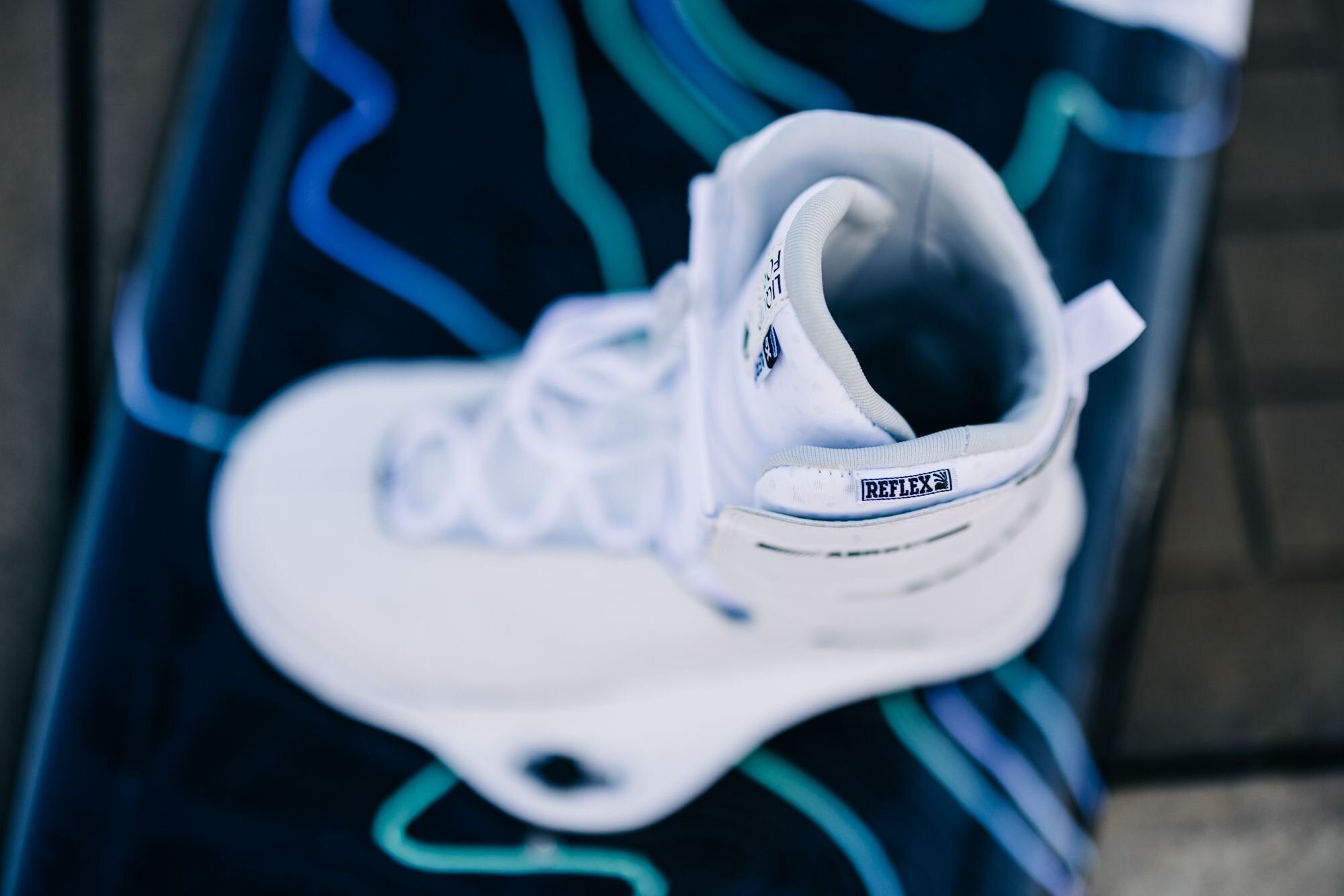
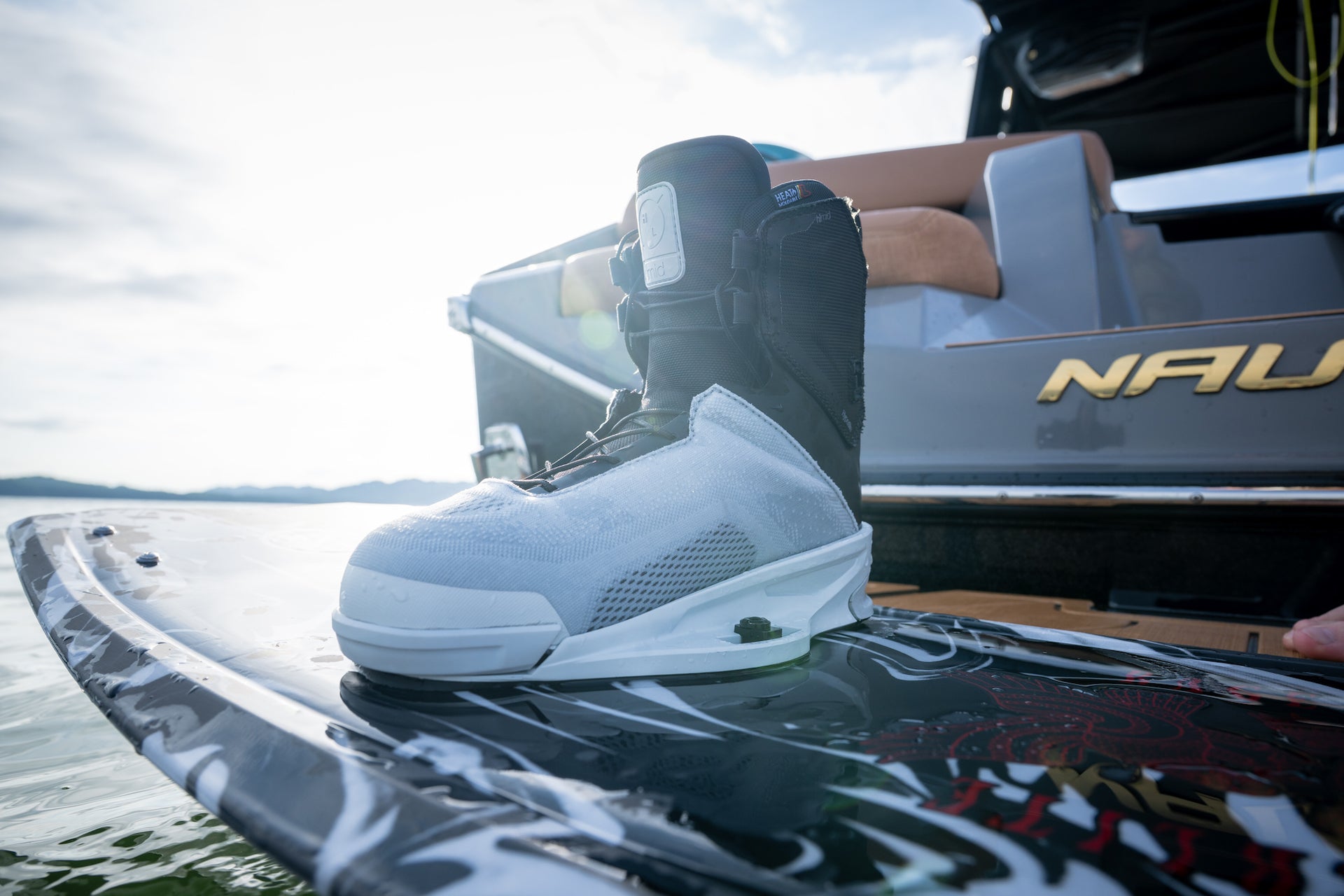
Closed-toe bindings wrap the whole foot and are sized more like a shoe (a single size, or a narrow range), so the fit is more precise. That precision is the point: less slop, quicker reactions, more of your input actually reaching the board. It's the support and response serious riders are after.
The rule of thumb:
- Riding solo and chasing progression? Closed-toe, if the budget allows.
- Sharing a board, watching the spend, or just starting out? Go open-toe.
If you're a serious rider but still share the board, keep your own closed-toe pair on it and a cheap open-toe set in the boat for everyone else — swapping over takes a minute. Or if that’s too much trouble, tell your friends to suck it up!
Getting the size and fit right
Binding sizes match your shoe size, so use that as your starting point. From there, two things matter.
Snug, not painful. Too loose and you've got no real control over the board. You want them firm and locked in, no heel lift, but not so tight your foot goes numb. If you're between sizes, go up rather than down — it’s easier to tighten a boot that's a touch big than stretch one that's too small.
One more thing worth knowing: higher-end closed-toe boots often come with foam inside that will pack out to the shape of your foot for a near-custom fit over time. Some are even heat mouldable to get this right from day 1. If you buy a high-end binding and that first ride doesn’t feel quite right, don’t fret — it’ll shape up over the course of a few rides.
Flex and feel
People talk about flex like a beginner-to-advanced ladder. It's not quite that simple. It's a preference, much like rocker on a board.
A softer, more flexible boot gives you freedom of movement: easier to tweak a grab, more forgiving when you land a touch off, more playful underfoot. A stiffer boot drives harder, transferring your energy to the board faster and holding you locked through a hard edge, which some riders love and others find unforgiving.
Plenty of advanced riders ride soft because they like the mobility. Plenty ride stiff because they want the response. Neither is more "correct." It's about how you like a board to feel.
If you’re unsure, lean towards the softer end. The extra mobility and forgiveness are more likely to help your riding than a really stiff, responsive binding.
On lacing: most boots use velcro, traditional laces, or a mix of both. Velcro is the convenient, lower-cost option: quick on and off, easy to share. Laces give you more even, dialled-in tension and are the dependable all-rounder.
Other options (like BOA or gummy straps) exist across different brands. Each comes with its own benefits and drawbacks. But it’s most likely you’ll be looking at something with laces or velcro, and for the vast majority of riders these are perfectly fine.
Bindings for park riding
Cable riding means falling a lot, climbing out and walking back to the dock — so being able to get off the board quickly matters. Two setups handle it, and it's worth weighing them against each other:
- System bindings: snowboard-style. The boot clicks out of a baseplate that stays bolted to the board, so you step off and walk back with nothing to unbolt. Hyperlite's System boots are the best known.
- Removable liners: more brands play in this space than the snowboard style. With this, you put the liner on, then step into the binding case. Slingshot and DUP tend to be the leaders here.
Either does the job at the park. For boat riding, a standard binding is simpler and works better. Unless you're putting real time in at a cable park, you don't need either.