What makes a beginner wakeboard?
The boards on this page all look different, but they share a commonality that puts them on this page. That is two things that we firmly believe should belong in every beginner rider’s setup: stability and forgiveness.
These are the two things, above all else, that will help you feel comfortable on your board and give you the confidence to push yourself. No single design feature is responsible for these, but there are some common threads.
Rocker
Continuous is the most popular rocker profile for entry-level wakeboards. It’s consistent and predictable, so you learn what the board does (and how to control it) more easily.
Some variations (such as a subtle three-stage) change this behaviour. These boards will settle deeper in the water, reducing the loose, “skater” feeling that some riders fear.
Base & Width
The base of a board uncovers a lot of secrets as to how it rides. The more going on down there (deep channels, long moulded rails etc) the more responsive a board is likely to be. A completely flat base has the opposite effect (obviously). Most beginners want a sweet middle ground — a nice balance of control by default with forgiveness when you need it.
Increased width profile provides two benefits to beginners — they’re quicker to surface on deep water starts, and more stable once you’re standing. A board that holds its width through to the tip and tail further enhances that stability.
When combined with a continuous rocker, wider boards can also be more forgiving — they tend to “release” and slide sideways when you lose balance, rather than tracking in a direction you’re not ready to go.
Fins
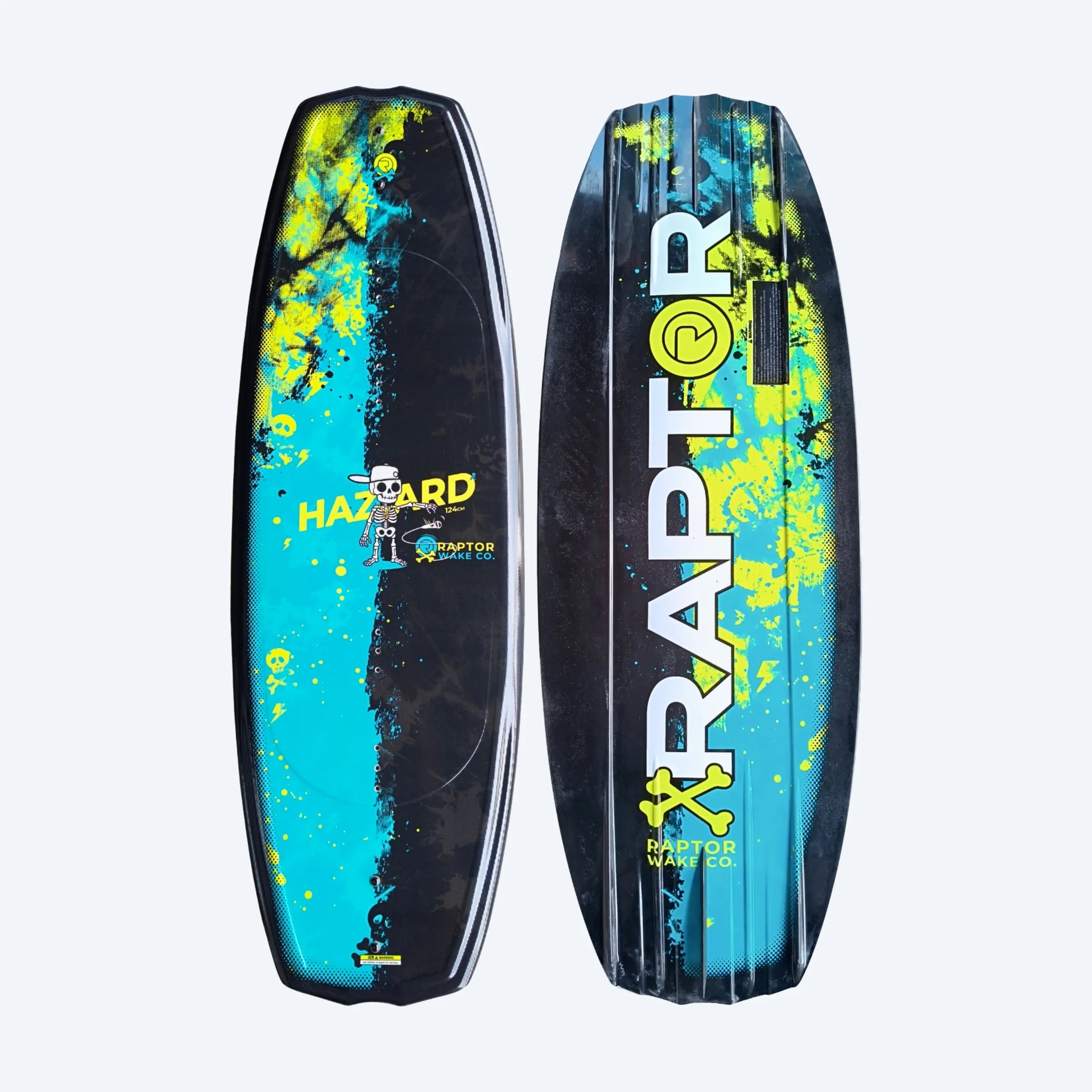
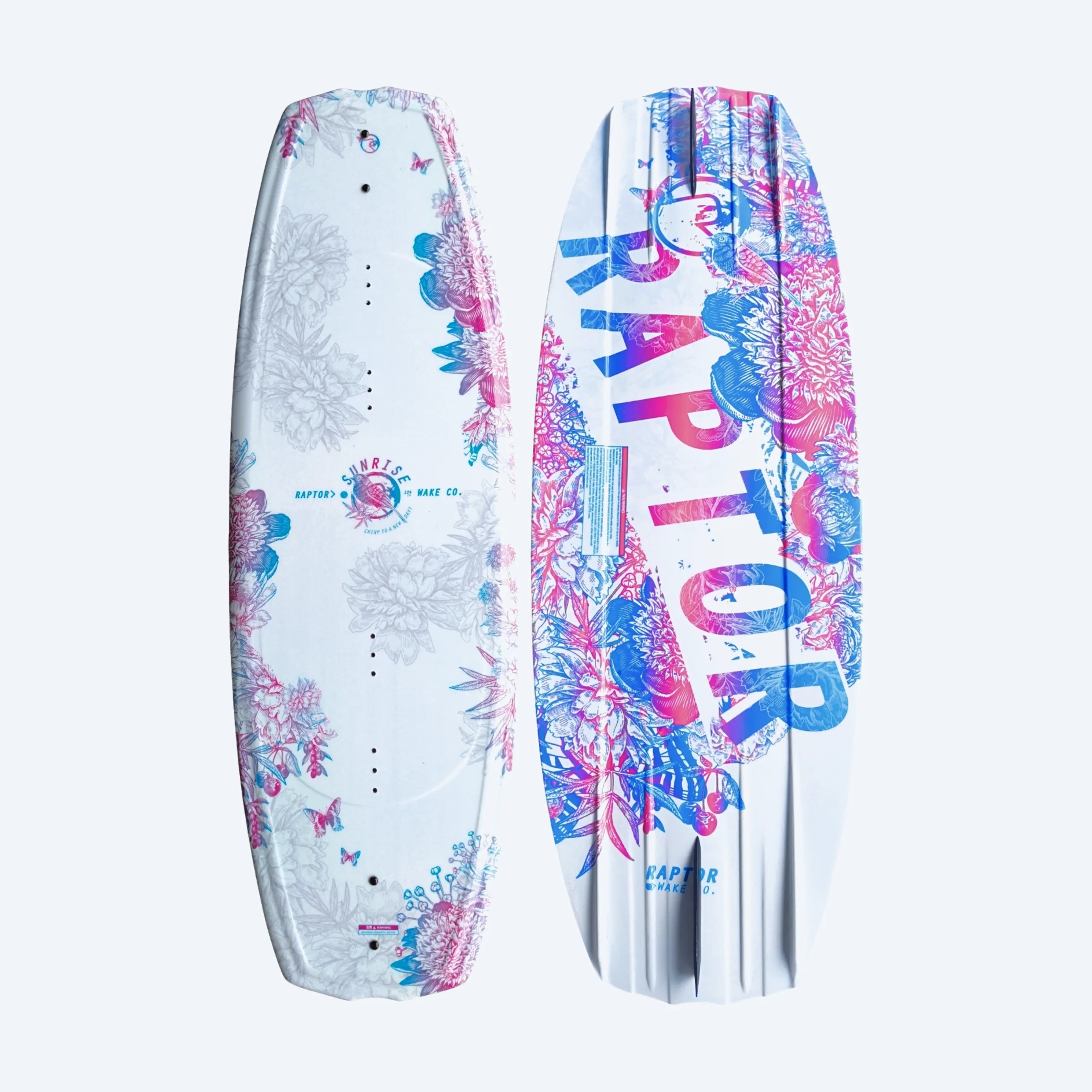
It goes without saying fins are vital. One of the giveaways that a board is targeted to beginner riders is the inclusion of a centre fin — usually removable with a couple of small screws.
Keeping the fin helps massively on day one. First-time riders tend to struggle to get the board pointing in the right direction at first. The centre fin helps here — grabbing the board and straightening it out in the direction of travel.
Once you’re confidently riding, crossing the wake and maybe even thinking about those first jumps, it’s time to remove that centre fin. You’ll notice immediately how much more responsive the board feels — perfect for riders looking to level up.
What’s not important
None of this is about pop, speed, or sharp reactive turns. That board is the goal — but it takes a rider who can already control it, and that isn't you on day one.
Start on the stable, forgiving one and you'll ride more and your skill and confidence climb every session. That's the fastest way to the sharp board, not the slow one.
One last thought: size
A bigger board provides more surface area, translating to even more stability. If that sounds like something you’d want — or you're caught between two sizes — go up.
You trade away a little responsiveness, but you won't miss it yet. Just make sure the size you want actually comes in the board you've chosen. (Our sizing guide has more detail on this.)
For everything else — every board feature and what it does on the water — that's what our how to buy a wakeboard guide is for.